Sponsorship's proof problem: why exposure no longer sells
Sponsors used to buy reach and prestige. Now they arrive with a measurement framework and a finance director. Rights holders are rebuilding commercial teams around evidence — and the merchandise they already sell is the cheapest proof they own.
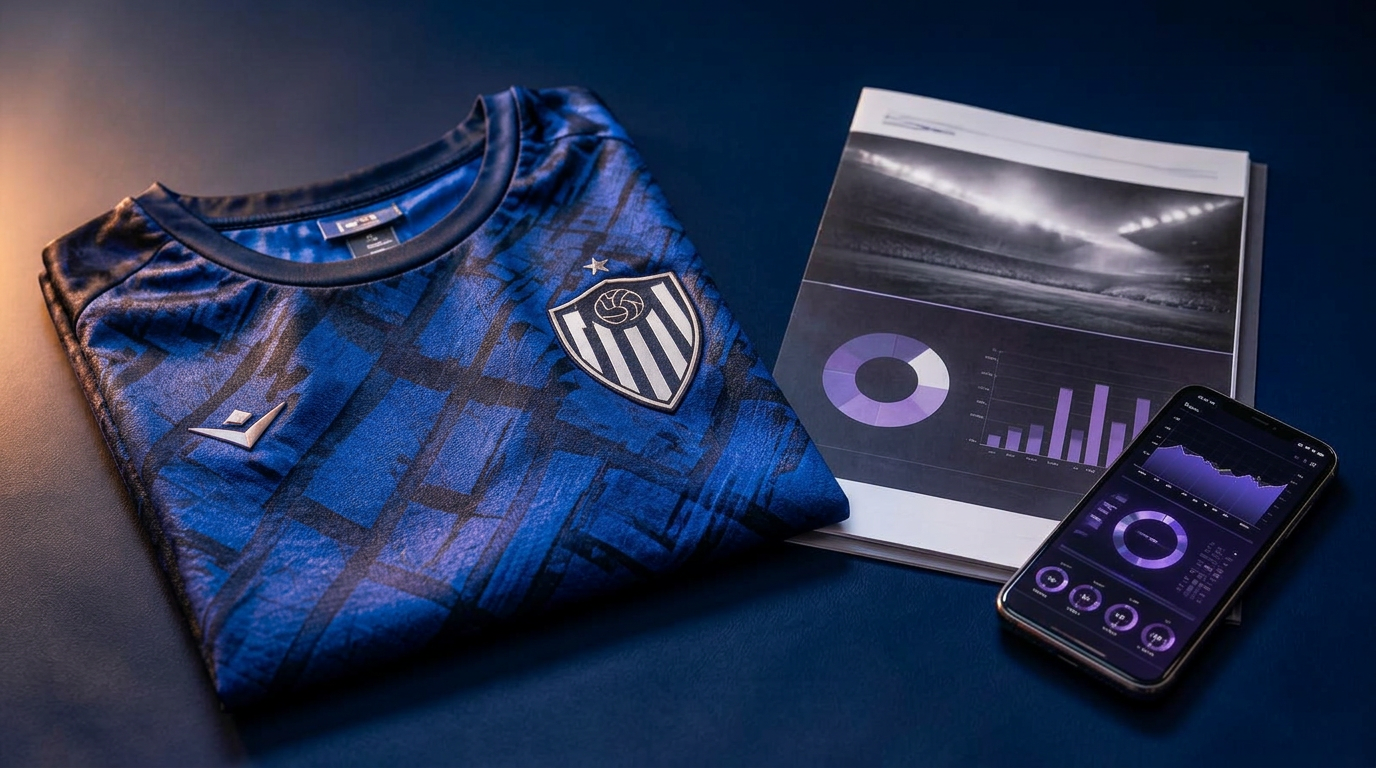
For most of its history, sponsorship was sold on faith. A brand put its name on a shirt, a stand or a trophy, pointed at the size of the crowd and the broadcast audience, and called it value. That pitch is running out of road. Marketing budgets are being examined line by line, and the people signing them now want to know who was reached and what they did about it (background on the shift).
The clubs adapting fastest are the ones who stopped selling inventory and started selling evidence. The Chicago Bulls spent two years building a data operation specifically to answer the questions CMOs now bring to the table, rather than relying on profile alone (Digiday, June 2026).
Exposure is what a sponsor gets. Proof is what they can defend internally in January.
What sponsors ask for now
- Identified reach, not estimated reach. How many actual people, not how many impressions modelled from attendance.
- Consent. How many of those people opted in, and what can lawfully be done with them afterwards.
- Attributable actions. Codes redeemed, sign-ups, sampled products, store visits — anything that survives contact with a performance-marketing team.
- Repeatability. Whether the same activation can be run again next season and compared like for like.
None of these are unreasonable. They are the same questions any other line of marketing spend has had to answer for a decade. Sponsorship is simply late to the conversation.
The measurement layer most rights holders already own
The usual response is to buy another audience platform. But the most under-used measurement surface in sport is not digital at all — it's the physical estate the organisation already sells and hands out. Shirts. Tickets. Wristbands. Pins. Programmes. Seat-back tags. Every one of those items is in the hand of someone who has already paid to be associated with you, and every one of them can carry a chip or code.
That matters because it inverts the economics of measurement. Digital measurement gets more expensive as you chase more precision. Product-level measurement is bought once, in the manufacturing run, and then keeps reporting for the life of the object.
What a sponsor actually sees back
Take a single tagged shirt run as a worked example. A sponsor's activation lives on the page behind the tag: a welcome, a reward, an offer, a piece of content. From one run you can report:
- How many items were activated, and how quickly after purchase.
- Where activation happened — matchday, at home, in market, abroad.
- How many people opted in to hear from the club and from the sponsor.
- How many took the sponsor's action, and how many came back for a second tap.
- Which tiers, products and moments produced the most engaged owners.
That is a season-long panel of known, consenting supporters, tied to a physical product the sponsor helped pay for. It is a far better renewal document than a reach estimate.
What to put in the next partnership deck
- A named, measurable objective per activation — not "awareness".
- The volume of product carrying the activation, and the expected activation rate.
- The consent position: who owns the data, on what basis, for how long.
- A reporting cadence and a template the sponsor's own team can read.
- A baseline from a previous run, so the second year has something to beat.
What not to promise
Credibility is the point of the exercise, so be honest about the limits. A tap tells you an object was engaged with; it does not tell you who scanned it unless they choose to tell you. Not every owner activates — a good programme converts a meaningful share of a run, not all of it. Attribution to in-store sales requires the sponsor's own systems to meet you halfway. And every data point has to be collected on a lawful basis you can explain to a fan in one sentence.
Sponsors do not punish honest numbers. They punish numbers that fall apart when their analysts open them.
The bottom line
The rights holders who will hold their rate card through the next renewal cycle are the ones who can show, per activation, who they reached and what those people did. That capability does not have to be bought as a platform. For most clubs it can be built into the merchandise, tickets and credentials already going out of the door this season.