The EU has stopped brands destroying unsold clothing — what that means for kit and merch
From 19 July 2026, large companies can no longer destroy unsold apparel and footwear in the EU, and every business will have to disclose what it discards. Sports and music merchandise is unusually exposed. Here's the practical read.
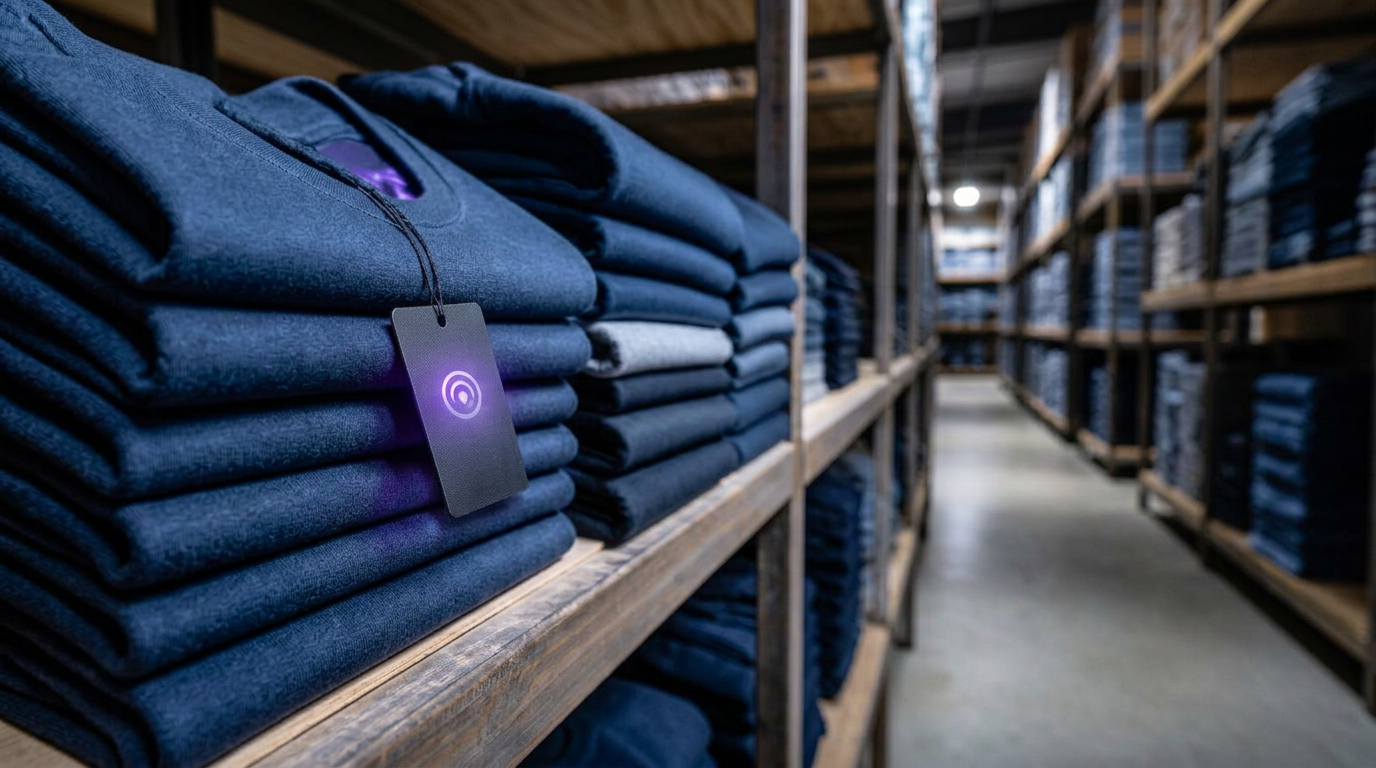
Overproduction has always been the quiet cost of merchandise. Kit is ordered against a forecast, the forecast is a guess about a season nobody has played yet, and whatever is left at the end goes somewhere the brand would rather not describe in public. As of this summer, in the EU, the quietest of those options is closed.
From 19 July 2026, large companies are prohibited from destroying unsold clothing, clothing accessories and footwear in the EU, under Article 25 of the Ecodesign for Sustainable Products Regulation (European Commission, July 2026). The Commission adopted the supporting delegated and implementing acts in February — one setting out the narrow cases where destruction is still allowed, the other fixing a standard format for disclosing what gets discarded (Commission announcement).
The rule does not ask you to sell more. It asks you to be able to account for every garment you did not sell.
What the rules actually require
- A destruction ban. Large companies must prioritise keeping unsold apparel, accessories and footwear in use — selling them, donating them, or preparing them for reuse — rather than destroying them. Smaller businesses are phased in later; micro and small enterprises sit outside the ban.
- A disclosure duty. Separately, businesses must report discarded unsold consumer products in a standardised format — quantities, categories, and the reasons for discarding them (summary of the February acts).
- Narrow derogations. Destruction remains permissible only in defined circumstances — health and safety, damage, counterfeits, and similar. "Brand protection" is not a general escape hatch.
Exact thresholds, categories and reporting dates depend on your company size and where you place product on the market. Check the position with your own compliance counsel before you build a policy around it — this piece is orientation, not legal advice.
Why sports and music merchandise is unusually exposed
Most apparel ages slowly. Merchandise ages on a fixture list. A shirt is dated the moment the sponsor changes, a tour tee is dead stock the week after the last date, a commemorative run for a final only has a market if the result went the right way. The category is built on scarcity, sentiment and short windows — which is exactly the profile that generates unsellable inventory.
- Dated kit: last season's shirt with a lapsed sponsor across the chest.
- Tour and event stock left in a warehouse after the run ends.
- Speculative "winners" print that never becomes winners print.
- Returns and sizing overhang from a launch drop.
Historically, some of that was written off. Now it either has to find a second life, or it has to appear in a report.
Why product identity is the practical answer
The awkward part of the new regime is not the principle — almost nobody defends incineration — it's the bookkeeping. To report accurately, and to resell or donate at scale without cannibalising your own market or creating a counterfeiting problem, you need to know what each item is and where it went. That is an identity problem before it is a sustainability problem.
A per-item record — a chip or code in the garment that resolves to a unique product identity — makes several awkward things routine:
- Accurate disclosure. Counting items by SKU is an estimate. Counting by item is a record.
- Confident resale. Off-price and secondary channels are safer when each garment can be verified as genuine and traced back to the original run.
- Donation without leakage. Items routed to reuse stay identifiable, so diverted stock reappearing on a marketplace is visible rather than invisible.
- A relationship at the end of it. The same tap that proves provenance to a second owner can register that owner as a known fan — see how connected apparel handles ownership transfer.
This is the same project as the 2027 passport
The destruction ban and the Digital Product Passport come from the same regulation. One asks what happened to product you didn't sell; the other asks what the product is made of and what happens to it at end of life. Both are answered by the same per-item data carrier. Anyone budgeting a tagging programme for textile passports in 2027 should scope unsold-stock reporting into the same piece of work rather than running two projects a year apart. Our longer read on that wave is here: EU Digital Product Passport in 2027.
A short readiness checklist
- Establish whether you are in scope now, in 2030, or not at all — by entity, not by brand.
- Find out today how much unsold merchandise you generate per season, and where it currently goes.
- Agree who owns the disclosure report internally before the first one is due.
- Decide your reuse hierarchy: full-price, off-price, staff, donation, recycling.
- Tag the next drop at item level so the following season's numbers are counted, not estimated.
- Use the same carrier for the fan relationship, so the compliance budget buys two things.
The bottom line
The EU has turned overproduction from an accounting footnote into a disclosed number. For merchandise operations, that changes forecasting, it changes what you print speculatively, and it makes the second life of a garment a commercial question rather than an afterthought. Brands that already know what each item is will find this administrative. Brands that don't will find it expensive.